
Selecting a suitable solar charge controller is crucial to safeguard the effective and efficient functioning of your solar energy system. Whether it’s an off-grid cabin, RV, or backup solar power system for your house, knowing about different types of controllers and their installation procedures can help you get the best out of your equipment. The following guide provides information on how to select an appropriate controller, the wiring process, and some practical tips to ensure the system runs flawless.
Understanding Solar Charge Controllers
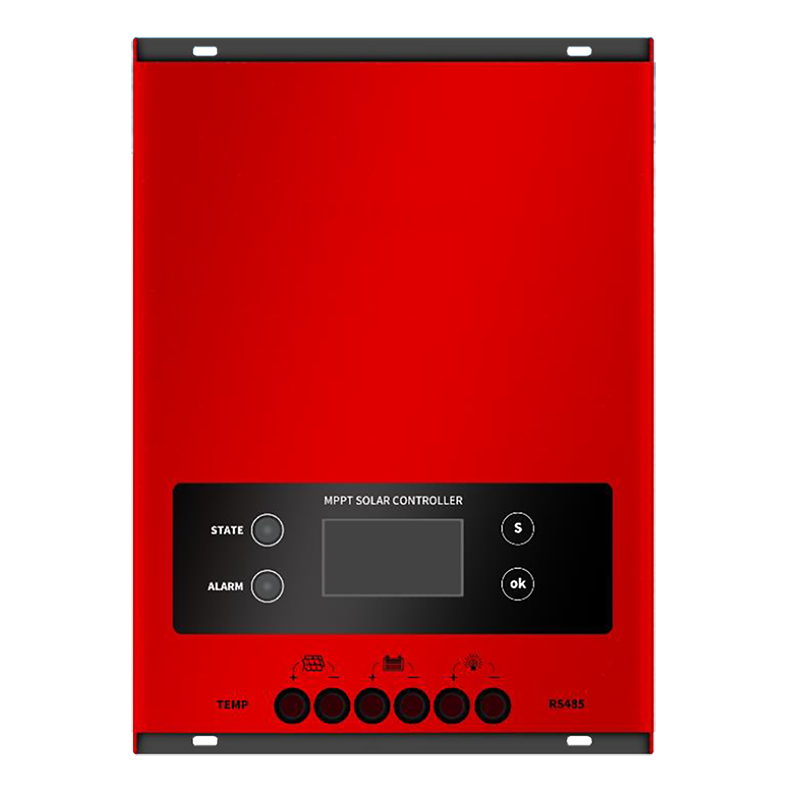
A solar charge controller is located in the middle between the solar panels. The solar panels generate voltage and current and give it to the batteries. The controller, therefore, helps in preventing excess charging of batteries. The controller regulates voltages and currents thus protecting batteries from damaging effects. Solar charge controllers have many features, including basic voltage regulation or more advanced systems that can monitor the process depending on the battery type being charged. There are modern solar charge controllers that enable remote management of the process and can be customized depending on the type of batteries being charged (lithium batteries, AGM batteries, flooded batteries, sticky batteries).
PWM vs. MPPT: Which Is Best?
| Feature | PWM Controller | MPPT Controller |
|---|---|---|
| Technology | Pulse Width Modulation | Maximum Power Point Tracking |
| Efficiency | Lower (~75–80%) | Higher (up to 99% or 15–30% more energy) |
| Ideal System Size | Small setups (RV, cabin) | Medium to large arrays, scalable systems |
| Panel Voltage Matching | Best when panel and battery voltages match | Works with higher voltage panels, converts excess voltage |
| Cost | Lower | Higher |
| Expansion Capability | Limited, less flexible | Flexible, supports expansion |
| Performance in Variable Sunlight | Average | Optimized tracking for changing conditions |
| Recommended For | Budget-conscious, simple applications | Efficient, future-proof systems |
PWM controllers are both affordable and simple, making them the best option to use in small systems where voltages match. PWM controllers are also reliable in small tasks, such as RVs or cabins, that do not need a lot of energy. In contrast, MPPT solar charge controllers are more efficient for high voltage systems or with changing sunlight. MPPT solar charge controllers are better in terms of energy utilization than PWM controllers, since they allow converting the excess power being produced by panels into usable charge for the battery, which increases the energy delivered by 15-30 percent.
Sizing Your Solar Charge Controller
Proper sizing is vital. Consider:
Maximum Current: Calculate the total short-circuit current (Isc) for your array and include an additional 25% safety margin. For instance, if Isc is 32A, select a controller with a rating of not less than 40A.
Voltage: Make certain that your controller can manage the battery voltage (12V or 24V or 48V) of your system and the maximum voltage in open-circuit of a panel that may increase significantly during low-temperature conditions.
Correct Wiring Order: Battery First, Panels Second
To begin, connect the battery bank to the controller. This powers the controller and allows it to sense the voltage of the system. Once this is done, the solar panels can be connected. When taking the system down for maintenance, remember to disconnect the panels before disconnecting the batteries. This prevents any sparking and subsequent damage to the controller.
Wiring Configurations: Series vs. Parallel
Solar panels are capable of being wired in series (adding voltages) or in parallel (adding current while voltage stays constant). MPPT controllers usually perform best with series arrays so that losses through distance are minimized and performance maximized. Typically, batteries are wired in parallel to achieve better storage.
Modern Controller Features
New solar smart charge controllers enhance safety and ease-of-use:
- Bluetooth or app-enabled remote monitoring capability.
- Personalized profiles for different types of batteries.
- Multiple charge stages (bulk, absorption, float) for battery lifespan.
- Temperature sensor enabling charging in difficult conditions.
- Built-in safety features: overcurrent, voltage, reverse polarity, and short circuit protection.
Installation Mistakes to Avoid
For reliable operation, avoid:
- Employing wiring that is too small for the application, causing overheating or voltage drops.
- Neglecting proper grounding, which makes the system susceptible to electrical defects.
- Using incompatible solar panels, which negatively affects system performance.
- Overlooking battery temperature gauges, which are necessary for lithium and AGM batteries.
Solar Charge Controller FAQs
Can I use a PWM controller with high-voltage panels?
Not recommended. PWM works best when panel and battery voltages match; high-voltage panels waste excess voltage as heat.
What happens if I connect panels before the battery?
The controller may not sense system voltage and could be damaged. Always connect the battery first.
Do I need a temperature sensor for lithium batteries?
Yes. Lithium and AGM batteries are sensitive to temperature, and a sensor helps prevent unsafe charging.
How much headroom should I add when sizing the controller?
Add about 25% above the array’s short-circuit current to handle safety margins and occasional peaks.
Brand Selection and System Expansion
It is advised to select trusted brands, such as Victron Energy, Renogy, and EPEver. If there is a plan to upgrade the system in the future, it is better to buy a charge controller which has the ability to work with more than one solar panel or battery.
Selecting and connecting solar charge controllers is the key to efficient and safe solar energy production. The right combination of systems and proper wiring techniques will lead your solar energy generation to success. New systems such as MPPT and smart solar charge controllers, proper connection maintenance and the right equipment size will all contribute to the successful usage of your solar system.
Post time: Oct-22-2026