
Understanding Solid-State Relays
Solid-state relay (SSR) technology has transformed electrical switching through the use of semiconductor devices rather than mechanical contacts. Unlike electromechanical relays, SSRs deliver faster, more reliable, and longer-lasting performance, making them a preferred choice for automation, manufacturing, and many other sectors.
What Is a Solid-State Relay?
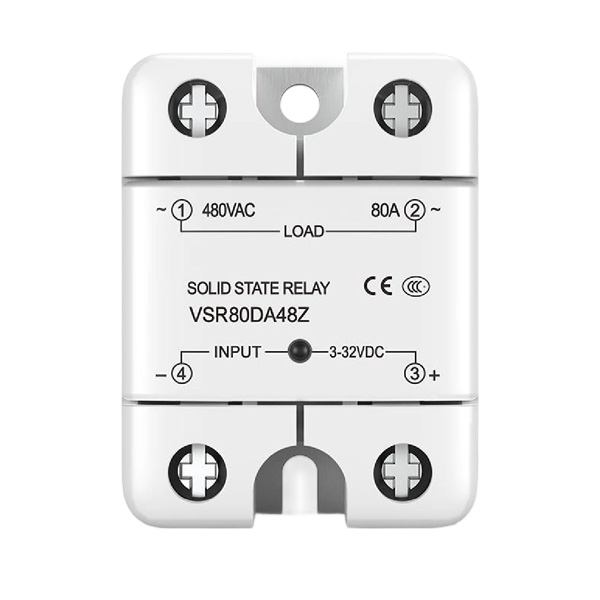
A solid-state relay is an electronic switch that operates without moving parts. By relying on semiconductors such as triacs, thyristors, or MOSFETs, SSRs efficiently control circuits. This approach enables rapid, silent, and durable switching, supporting configurations for single-phase, DC, and 3 phase solid-state relay applications.
How Does a Solid-State Relay Work?
An SSR consists of an input circuit—often optically isolated—a control circuit, and an output switching element. A low-voltage signal triggers the relay, which then allows high-voltage or high-current loads to be switched. Optical isolation ensures that control systems are protected from surges or faults.
AC SSRs use triacs or thyristors, while DC solid-state relay units rely on MOSFETs. This flexibility lets engineers match relays to specific load types and voltage requirements.
Key Benefits of Solid-State Relays
Solid-state relay solutions offer major advantages:
Durability and Reliability: With no moving contacts, SSRs last longer and cycle frequently without deterioration.
Fast Switching and Silent Operation: Switching occurs almost instantly and without noise, ideal for precision controls and noise-sensitive environments.
Resistance to Shock and Vibration: The absence of physical contacts makes SSRs less vulnerable in harsh settings.
Electrical Isolation: Optical isolation enhances safety for sensitive control electronics.
Reduced Maintenance: Their robust construction minimizes upkeep and maximizes operational uptime.
Main Applications of Solid-State Relays
SSRs are used in a wide range of sectors:
Industrial Automation: Controls motors, pumps, and heating elements for precise process management.
HVAC and Lighting: Enables high-frequency switching and energy-efficient operations.
Medical Equipment: Offers silent and low-EMI performance, ideal for sensitive instruments.
Home Appliances: Enhances reliability in washing machines, ovens, and refrigerators.
Renewable Energy: Facilitates rapid switching in solar and wind power systems.
Types of Solid-State Relays
Solid-state relays come in several forms:
AC Solid-State Relay: Suitable for switching AC loads like lighting or heating.
DC Solid-State Relay: Ideal for batteries, solar panels, and DC motors.
3 Phase Solid-State Relay: Used for large three-phase equipment in industry.
Zero-Crossing Relays: Minimize electrical noise by switching at zero voltage crossing.
Random-On Relays: Switch immediately upon signal, offering real-time control.
Choosing the Right Solid-State Relay
Selecting an SSR involves evaluating several criteria:
Load Type and Rating: Determine whether you need AC or DC switching and match current/voltage requirements.
Switching Method: Decide on zero-crossing for reduced noise or random-on for immediate action.
Control Signal Compatibility: Ensure the relay operates on your available signal voltage and type.
Mounting and Heat Management: Choose the style that fits your installation and provide proper cooling.
Quality and Protection Features: Opt for trusted brands like Crydom solid state relay and check for built-in protection.
Frequently Asked Questions
What Are Its Benefits?
SSRs are silent, reliable, fast, and resistant to mechanical stress.
How to Choose One?
Assess your load and installation needs, and select the right specifications and brand.
Can SSRs Handle 3 Phase Loads?
Yes, there are 3 phase solid-state relay options for industrial motors and heating.
Do They Require Heatsinks?
For high-power applications, heatsinks or cooling may be necessary.
Emerging Trends in Solid-State Relays
Recent innovations include smart relays with integrated microprocessors, higher efficiency semiconductors, compact designs, and built-in protection features. These advancements contribute to better performance, safer operations, and easier integration into modern systems.
In summary, solid-state relays are essential for efficient and reliable electrical switching. Their advantages of speed, durability, and versatility make them ideal for demanding applications across multiple industries. By understanding SSR operation and selecting the right model, engineers can achieve reliable performance and minimize downtime. As technology advances, SSRs continue to evolve, providing smarter and more robust solutions for the future of electrical switching.
Post time: Oct-08-2026