
Temporary disturbances are among the main reasons for power outages. Such disturbances may cause momentary interruptions in power supply, for instance, due to lightning strike, contact with trees, animals, or transient breakdown. Electricity can be turned back on in seconds during such interruptions. Automatic reclosers make it possible through automatic circuit breaker closure or reopening after removing the fault.
This technology finds application at utility networks, in industrial power systems, in renewable projects, and in needed facilities where it is important to minimize downtime.
What Is an Automatic Reclosing Protector?
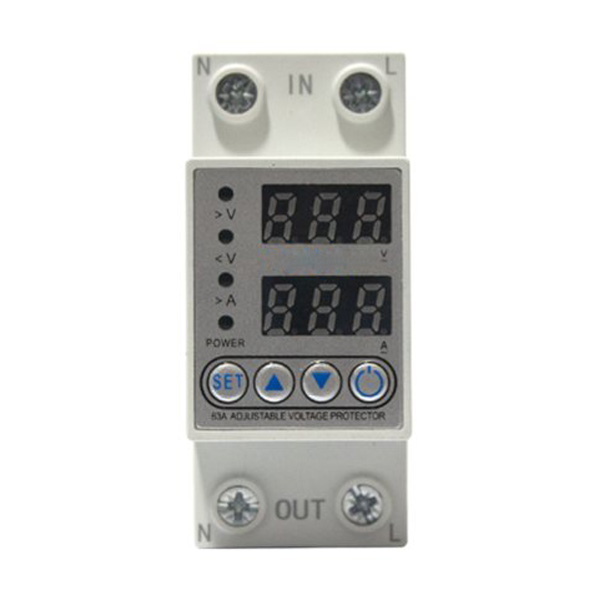
The Automatic Reclosing Protection device is a safeguard and managing apparatus that issues a command to reopen the circuit when the breaker, recloser, or isolated mechanism has blown out due to some malfunctioning. It serves the purpose of restoring the power in cases of temporary breakdowns.
It can also be referred to as self-reclosing unit, reclosing relay protective equipment, automatic reclosing relay, recloser protection mechanism. Although the construction of the units may differ, their objective remains the same, that is, to detect the fault, wait for a short time, and recover power supply automatically.
How It Works
When the protection system detects overcurrent, short circuit, or ground fault, it breaks the circuit to protect connected wires and equipment. After a set delay, the reclosing device attempts to close the breaker again—if the fault has cleared, power remains on; if not, the breaker trips again, and the system may make several attempts before locking out. Lockout leaves the circuit open until a trained operator investigates and manually resets it, preventing repeated energization of a permanent fault that could damage equipment or compromise safety.
Key Benefits Explained
Improved reliability: Temporary faults usually occur in overhead circuits. Automatic reclosing can restore service within a few seconds without the need for manual intervention.
Less downtime and lower labor costs: Workers do not have to deploy their teams to act on minor faults. This is especially beneficial for wireless operations as it reduces traffic for remote stations.
Better fault isolation: By cooperating with other devices, such as relays, breakers, and sectionalizers, the system has the ability to separate the damaged section while maintaining operation of undamaged sections.
Support for remote monitoring: SCADA systems can be linked to contemporary gadgets in terms of remote control, alarms, documentation of events, and analysis of faults.
Equipment protection: Properly configured automatic reclosing devices impose a limit on the number of auto close attempts while latching when the fault still exists.
Common Applications
The most frequent practice of automatic reclosing is observed on overhead utility distribution feeders because of faults that often occur due to weather, foliage, and animals. It is employed in transmission systems, factories, solar and wind projects, water treatment plants, mines, and remote pumps.
Nonetheless, not every circuit is compatible with reclosing. Mostly, underground cable failures remain permanent; therefore, automatic re-energization can be limited. Equipment additional engineering has to be paid attention to for circuits used by large motors, transformers, generators, sensitive electronics, and vital processes.
What Should Buyers Consider?
Pick equipment with an appropriate voltage, frequency, short-circuit level, and other electrical characteristics to comply with the circuit control system and the desired relay operations. The relevant settings include the number of reclosings, time intervals between the reclosures, dead time, reclaim time, and the fault type that should be considered to reopen the circuit.
If your facility is equipped with SCADA or substation automation, check if the communication systems work together, including Modbus, DNP3, and IEC 61850. Also, the system must be both installed and tested by qualified electricians.
Frequently Asked Questions
What is an Automatic Reclosing Protector?
What it does is detects any momentary electric fault in the circuit that triggers power loss and tries to reinstate electricity automatically.
How many times can it reclose?
A variety of systems will use one to four attempts; however, the correct number of attempts will depend on the protection study and the equipment requirements.
Does it work without SCADA?
Yes. Although SCADA provides information, alarm, command, and event information remotely, it is also able to perform local operations.
An Automatic Reclosing Protector increases the reliability of the electricity by returning power after an electrical fault and keeping it isolated in case of electrical faults that do not go away. When designed, configured, and tested properly it can also maximize availability and reduce operational expenses.
Post time: Sep-03-2026